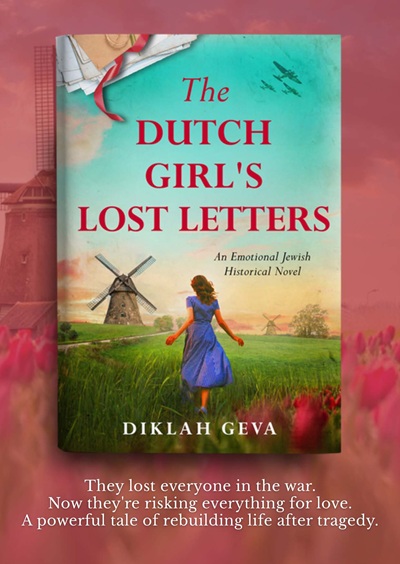
The Dutch Girl's Lost Letters
An Emotional Jewish Historical Novel
by Diklah Geva
- Literary Fiction
- Historical Fiction
- Holocaust Fiction
- Jewish Fiction (Based on a True Story)
The Book
In a time of darkness and horror, her letters were the only thing keeping his hope alive.
When Shlomo Lorsch and his wife Liz left the Netherlands for the Land of Israel before the war, he had high hopes for his new life as a pioneer. But as life on the kibbutz strains his marriage, Shlomo becomes desperately homesick. His only comfort lies in letters from his hometown friend, Janny van Praagh. When war breaks out and Janny’s letters stop arriving, Shlomo fears the worst.
In occupied Netherlands, Janny is a promising Jewish chemistry student when the Nazis invade. Forced into hiding, she survives nine different hiding places before being arrested and sent to Westerbork. After liberation, learning that none of her family survived, she immigrates to Israel in 1948. As the horrors she endured become too much to bear alone, she finds solace in Shlomo. Yet the two grow dangerously close, blurring the line between friendship and something that could ruin their lives.
Why This Book Matters
Most Holocaust novels end at liberation. The Dutch Girl’s Lost Letters goes further, following its characters into the hard reality of rebuilding their lives in the early kibbutzim of the new State of Israel. Spanning 1941 to 1951, it also brings to light the less familiar Dutch Jewish experience: life in hiding across nine different refuges, Westerbork, and the cold bureaucracy survivors faced after the war.
The novel is based on a true story and built around real letters from the author’s late mother. It weaves authentic correspondence and newspaper clippings into a dual narrative that alternates between Shlomo on the kibbutz and Janny in occupied Holland, with the mystery of the lost letters creating sustained tension. A forbidden romance gives the book strong commercial appeal while raising deeper questions about duty, survival, and the right to happiness after trauma.
Readers of Kristin Hannah, Kelly Rimmer, and Kristin Harmel will find the same emotional power and historical authenticity, together with a setting rarely explored in fiction: the idealism and the cracks of kibbutz life in Israel’s first years.
About the Book
Genre: Historical Fiction / Holocaust Fiction / Jewish Fiction (Based on a True Story)
Published on July 14, 2025 | 52,000 Words
For readers of The Nightingale, The Tattooist of Auschwitz, and We Were the Lucky Ones, The Dutch Girl’s Lost Letters is an emotional historical novel of survival, love, and rebirth, from Nazi-occupied Holland to the kibbutzim of early Israel.
Author
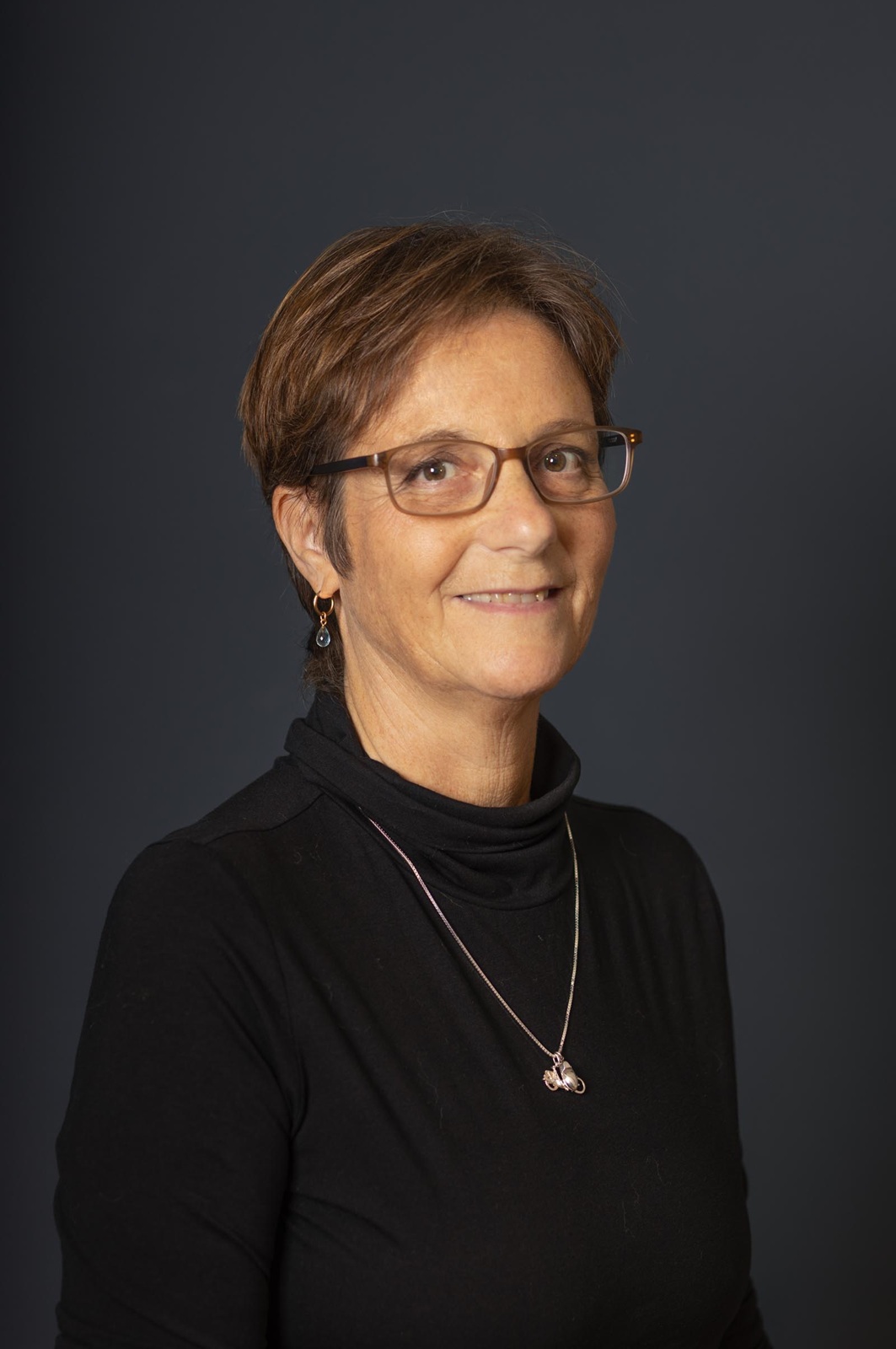
Diklah Geva
Diklah Geva was born in 1960 to Dutch parents who, during the kibbutz split of 1951, moved from Kibbutz Beit Hashita to Kibbutz Ayelet Hashachar, where she was raised. She holds a PhD in biostatistics and has spent more than four decades contributing to medical research.
Her debut novel was inspired by a collection of letters left by her late mother, Miriam, who passed away in 2015. While based on real events and containing authentic correspondence, the book adds some fictional letters and characters to carry the narrative.
Diklah wrote the book out of commitment to her mother’s wish: to remember and not to forget. Having grown up on the very kibbutz where the story ends, she brings an insider’s knowledge of the people, places, and history at its heart.
Rights Status
Publishing Rights Available
Translation Rights Available
Film Rights Available
Audio Rights Available
Comparable Titles
This book is suitable for readers who enjoyed:
- The Nightingale by Kristin Hannah
- The Tattooist of Auschwitz by Heather Morris
- We Were the Lucky Ones by Georgia Hunter
BISAC Categories
- FIC014050 – FICTION / Historical / World War II
- FIC046000 – FICTION / Jewish
- FIC041000 – FICTION / Biographical & Autofiction
- FIC027050 – FICTION / Romance / Historical / General
Themes
- Survival and Life in Hiding
- Letters as a Lifeline
- Rebuilding Life After the Holocaust
- Forbidden Love and Moral Duty
- Identity and Rebirth
- Kibbutz Ideals vs. Human Emotion
- Trauma That Cannot Be Washed Away
- Remembering and Not Forgetting
Keywords
For readers interested in:
- Holocaust and World War II fiction
- Historical novels based on true stories
- The Dutch Jewish experience and life in hiding
- Early Israel and kibbutz life
- Historical romance and forbidden love
- Epistolary novels and stories told through letters
- Women’s resilience and survival
- Jewish history and identity
FAQ
Is this book based on a true story?
Yes. It was inspired by real letters left by the author’s mother, and includes authentic correspondence alongside some fictional letters and characters.
What time period and locations does the book cover?
The novel spans 1941 to 1951, moving between Nazi-occupied Netherlands and the kibbutzim of Mandatory Palestine and early Israel.
How is the story told?
Through a dual narrative with multiple points of view, alternating between Shlomo in Israel and Janny in the Netherlands, enriched by real letters and newspaper clippings.
Has this book been published before?
Yes, it was published on July 14, 2025.
What is the word count?
52,000 Words.
Who will enjoy this book?
Readers of emotionally powerful Holocaust and WWII fiction, fans of Kristin Hannah, Kelly Rimmer, and Kristin Harmel, and readers interested in Jewish history and the kibbutz movement.
Rights Agent's Notes
The Dutch Girl’s Lost Letters enters one of the strongest categories in international publishing, WWII and Holocaust historical fiction, with two clear points of difference: the underexplored Dutch Jewish experience, and a story that continues past liberation into the founding years of Israel and its kibbutzim.
Its basis in real family letters gives publishers a powerful true-story hook for positioning and publicity, while the forbidden romance at its heart broadens its commercial reach. We see strong potential in European markets, especially the Netherlands, Germany, France, and the UK, and in English-language markets including the US, Canada, and Australia.